
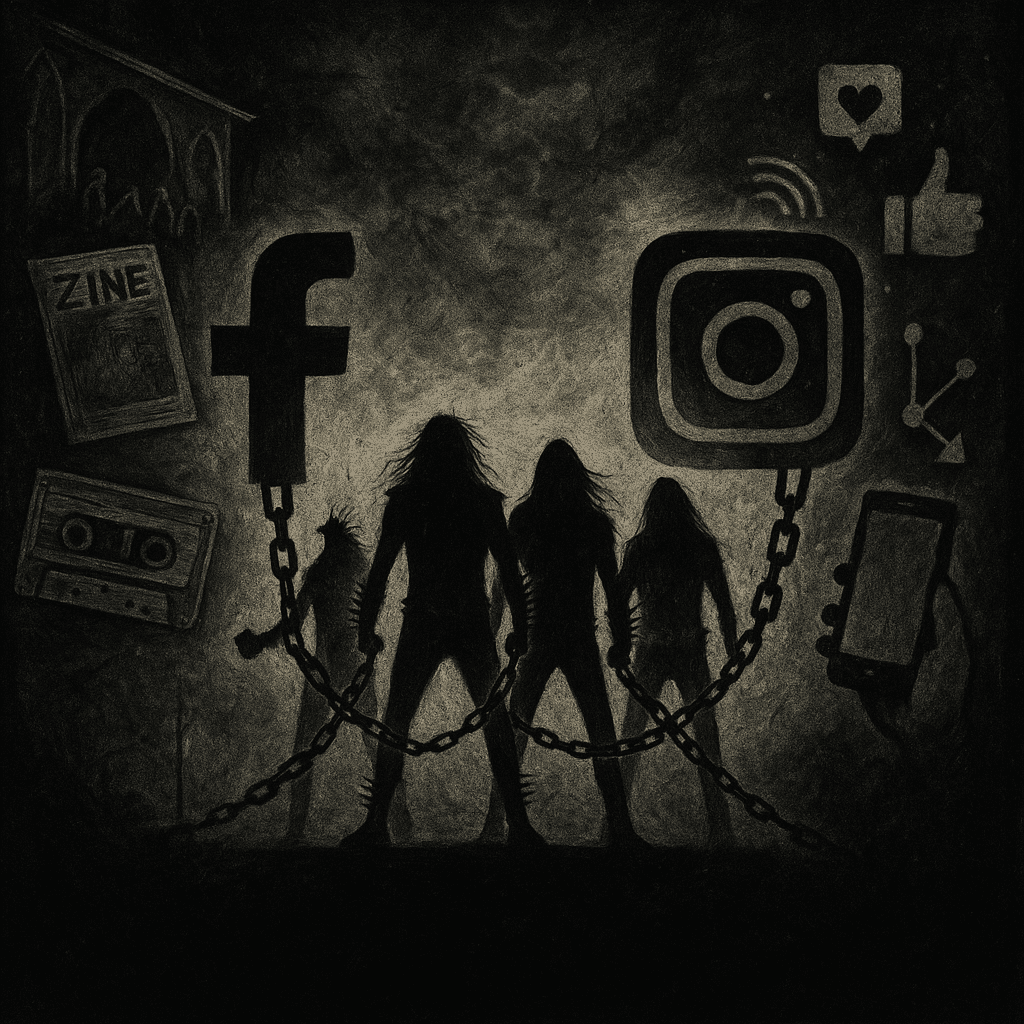
The contemporary black metal scene is deeply addicted to social media platforms, fundamentally altering the character of a genre once rooted in mysticism, exclusivity, and an underground ethos. This transformation brings both benefits and troubling consequences for the authenticity and integrity of a scene that, in the 1990s and 2000s, was known for its radical rejection of commercialization and mainstream culture.
The Scale of Addiction: The Modern Reality of the Black Metal Scene
The Ubiquity of Social Media
Today’s black metal scene is inextricably linked to social media. Bands, record labels, distributors, and fans regularly post content on platforms like Facebook, Instagram, and YouTube, creating an ecosystem of dependency that demands constant online activity. Studies indicate that musicians feel pressured to continuously produce content for their followers, transforming their role from artists to content creators.For black metal bands, this means balancing the maintenance of an underground image with the demands of social media algorithms. Paradoxically, a genre born in opposition to commercialization must now conform to the logic of corporate platforms.
Meta’s Centralization of Power
Particularly problematic is the centralization of Facebook and Instagram under Meta’s umbrella, where profiles are integrated into a single entity. This integration results in:
- User data being automatically shared between platforms
- Algorithms controlling content visibility without artists’ influence
- AI policies allowing photos and posts to be used for training artificial intelligence models without explicit consent
- Targeted advertising based on comprehensive behavioral profiles
The Paradox of Dependency: Hostages of Their Own Choice
The Cycle of Mutual Dependency
The most tragic aspect of the modern black metal scene is that artists, bands, and individuals associated with the genre see no alternatives for expressing their beliefs or promoting their work. They become hostages to corporate platforms, trapped in a destructive cycle.This creates an existential paradox: artists know that without a presence on social media, they practically cease to exist. Facebook and Instagram become their digital diaries, the only viable means of gaining visibility and attention. This dependency is so strong that even those who oppose technology, AI, and Facebook continue to use these platforms.
The Tyranny of Likes and Validation
By posting content, artists seek validation through likes and comments. Dependence on audience engagement becomes critical, as they know their music will remain invisible without algorithmic distribution. This leads to:
- Dopamine addiction triggered by each like
- A constant need for validation from strangers
- Comparisons with other artists on social media
- Loss of authenticity in the pursuit of engagement
Lack of Real Alternatives
The most frustrating reality is the lack of viable alternatives. When artists ask about other options, they are often told to “just quit social media,” but this does not address the challenges of promotion and distribution. Traditional channels—radio, television, and print media—are even more centralized and inaccessible to underground bands.
Negative Consequences for the Black Metal Scene
Loss of Mysticism and Exclusivity
The traditional black metal scene of the 1990s thrived on mystery, exclusivity, and limited access to music. Social media has dismantled these barriers, resulting in:
Demystification of bands through daily posts
Loss of cult status due to overexposure
Commercialization of the underground image
Algorithmic content selection replacing organic discovery
As Ihsahn from Emperor noted: “With social media these days, you get so close to the artist, which isn’t necessarily a good thing.”
Data Exploitation and Loss of Control
Black metal artists are becoming unwitting data providers for tech corporations:
- Artistic content is used to train AI without compensation
- Private information is collected and sold to advertisers
- Algorithms determine who sees their music
- Censorship can affect controversial content typical of black metal
Comparison: Old Scene vs. Modernity
The Era of Tape Trading and Fanzines (1990s/2000s)
The traditional black metal scene operated on entirely different principles of distribution and communication:
Key Features of the Old Scene:
- Tape trading: Exchanging cassettes by mail worldwide
- Fanzines: Printed magazines created by fans
- Personal connections: Building relationships through correspondence
- Exclusivity: Limited access increased the value of music
- Anonymity: Ability to conceal real identities
- Full control: Artists had complete control over their message
Modern Social Media
Today’s scene is characterized by:
- Instant access to a global audience
- Algorithmic control over content visibility
- Loss of privacy and anonymity
- Superficial interactions instead of deep relationships
- Data exploitation by platforms
- Pressure to constantly create content
Breaking the Cycle of Addiction
A Conscious Choice for Independence
Breaking free from the illusion of social media necessity requires courage and long-term thinking. Artists must realize that their value does not depend on algorithms, and an authentic fan community is worth more than thousands of superficial followers.
Building a True Community
Instead of relying on corporate platforms, black metal artists can:
- Foster direct relationships with fans through newsletters and websites
- Organize offline events—small concerts, meetups, or showcases
- Collaborate with local communities rather than global platforms
- Return to physical releases as the primary distribution medium
Challenges and Limitations
Economic Reality Disconnecting from major platforms comes with real costs:
- Reduced reach means fewer fans
- Lower revenue due to decreased sales
- Higher costs for promotion and distribution
- Greater effort required for alternative channels
Technological Barriers
- Learning curve for new platforms
- Audience fragmentation across various services
- Limited functionality of alternative solutions
- Need for technical support to maintain independent infrastructure
Overcoming Mental Barriers
The biggest obstacle is the mental dependency on social media validation. Artists must relearn to find satisfaction in:
- The creative process rather than likes
- Deep relationships with genuine fans
- The quality of their music over online popularity
- Their artistic vision, independent of trends
Conclusion: The Future of the Black Metal Scene
The black metal scene stands at a crossroads between commercial accessibility and underground authenticity. Addiction to social media erodes the genre’s core values—mysticism, exclusivity, and artistic independence. Paradoxically, artists often protest against technology and corporate control while remaining dependent on them in their daily practice.The closed loop of dependency—where Facebook and Instagram become the only means of gaining visibility and attention—must be broken through conscious decisions by artists. Alternatives exist, but they require courage, determination, and long-term thinking.The future of the scene depends on artists’ willingness to pursue a harder but more authentic path—one that doesn’t involve selling their soul to corporate algorithms. Only then can black metal preserve its transgressive power and underground ethos in the digital age.The choice lies with each artist: embrace the easy but destructive mainstream or take the harder road of building an authentic, independent fan community. History will show which approach prevails in the long term, but one thing is certain—true artistic independence has never been easy to achieve.
.png&w=640&q=75)